
What Is a Swipe Card Access Control System, and Is It Secure?
Two cards can look identical and be worlds apart in how hard they are to fake. Here are the three layers that decide how secure yours really is.
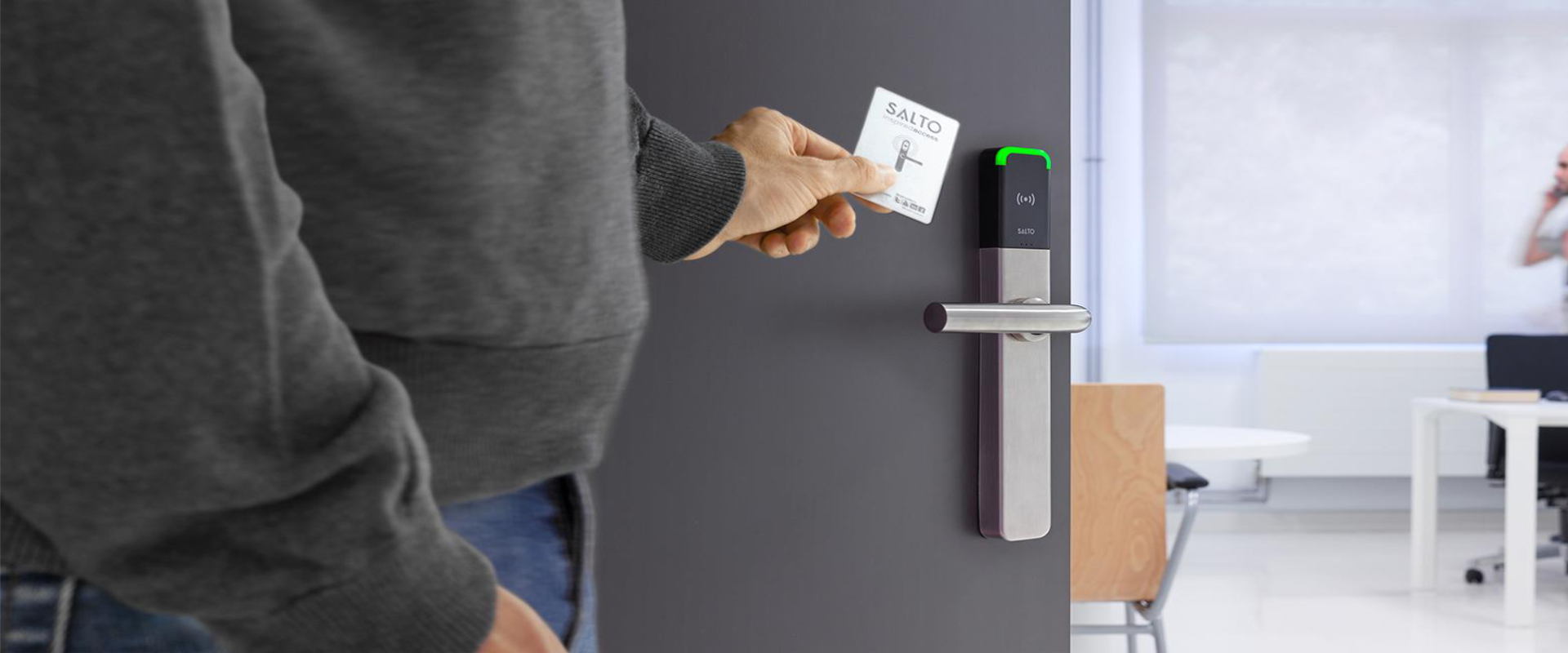
Some people are surprised to hear that a swipe card system can be more secure than a traditional lock and key. But not all swipe access is created equal. The card in your wallet and the one clipped to a bank employee's lanyard might look identical, but underneath, they can be worlds apart in how hard they are to fake.
Here's what's actually happening when you tap or swipe, broken down into the three layers that decide how secure it really is: the card itself, the electronics behind the door, and the software running it all.
Quick Introduction
- Swipe access works by reading a credential (a magnetic stripe or an RFID chip) and checking it against a list of who's allowed through that door.
- Older magnetic stripe cards are the least secure option and can be copied with cheap, widely available tools.
- Modern encrypted swipe card access systems use a "challenge-response" handshake that changes every time, making cloning far harder.
- The cloud software layer is what makes swipe card systems genuinely more secure than keys. Lost cards get deactivated instantly, and no locks need changing.
Layer One: The Card Itself
At its simplest, swipe access is just a credential: a physical object that carries an identifier. There are two common types.
Magnetic Stripe
The same tech as old hotel key cards. Cheap, but the data on the stripe can be read and copied with a basic magstripe reader bought online for next to nothing.
RFID & Proximity
These transmit their ID wirelessly to a reader, with no physical contact needed. This is what most modern swipe card access systems actually use, even though "swipe" has stuck around as the common term.
The card itself is just a name tag. Whether that name tag can be forged depends entirely on what's happening in the next two layers.
Layer Two: The Electronics
This is where a swipe card system either holds up or falls apart. A reader at the door picks up the card's signal and passes it to a controller, which decides whether to unlock.
The Weak SpotUnencrypted Cards Can Be Cloned in Seconds
Basic, unencrypted cards simply broadcast a fixed ID number, and that's the problem. Cheap, pocket-sized cloning tools can skim that number from a few centimetres away in under ten seconds and write it onto a blank card.
If your swipe access relies on this older tech, anyone who gets close enough to a legitimate card for a moment can copy it.
Better swipe card access systems use encrypted smart cards instead. Rather than broadcasting a fixed number, the reader sends a random challenge and the card encrypts it with a secret key before sending it back. That handshake is different every single time.
Basic / unencrypted card
- Broadcasts the same fixed ID every time
- Can be skimmed from a few centimetres away
- Copied onto a blank card in under ten seconds
Encrypted smart card
- Answers a random challenge with a secret key
- Handshake changes on every single tap
- An intercepted exchange is useless next time
Even if someone intercepts one exchange, it's useless for the next. This is the difference between a genuinely secure swipe card system and one that only looks secure.
Layer Three: The Cloud
Even a decent card and reader only get you halfway. The real security upgrade over a physical key is the software sitting behind it. Cloud-managed swipe card access systems let you:
- Deactivate a lost or stolen card instantly, from anywhere, with no rekeying required.
- See a full log of every entry, by user, door, and time.
- Set different access levels per person, and change them in seconds when roles change.
This is the layer most people underestimate when they ask if swipe access is secure. The card matters, but so does how quickly you can respond when something goes wrong.
So, Is a Swipe Card System Secure?
Honestly, it depends which one you've got. Basic magnetic stripe or unencrypted RFID swipe access is convenient but has known weaknesses. Encrypted swipe card access systems, especially paired with a PIN or biometric on your highest-risk doors, close most of those gaps.
Encrypted Card
A modern encrypted card is a solid, low-friction choice for everyday doors.
Card + Second Factor
Add a PIN or biometric reader on your highest-risk doors.
Choosing the Right Setup
Not sure which tier your building actually needs? Gronbek Security has been fitting access control systems for Perth businesses since 1981, and we'll tell you plainly if your current swipe card system needs upgrading or if it's already doing its job.
It's one part of the broader security solutions we handle across Perth. Call (08) 9433 3311 and we'll talk through what level of swipe access actually makes sense for your business.
Could Your Cards Be Copied?
Tell us what's on your doors now and we'll tell you plainly whether it needs upgrading or is already doing its job.
Call (08) 9433 3311 Access ControlGronbek Security • Fremantle & Welshpool • Security Agents Licence 15457